Walk any neighborhood from Carolina Forest to Surfside Beach after a humid spell and you will spot it, dark streaks sliding down once-bright shingles. Those stains are not simple dirt. In our coastal climate, algae, mildew, salt, and pine pollen combine into a film that makes a roof look older than it is. That sight matters when it is your home on the market or your HOA notice in the mailbox. A clean roof lifts curb appeal in a way a new mulch bed never will, and in Myrtle Beach, soft wash roof cleaning is the method that cleans without tearing into shingles.
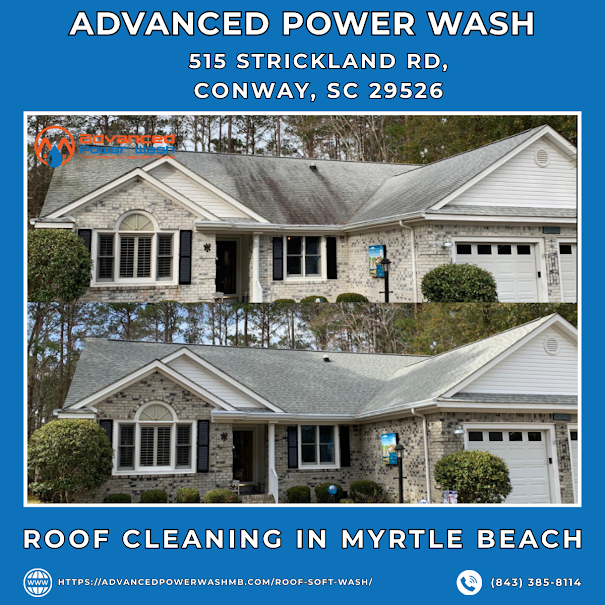
I have spent years working with coastal homeowners who want honest guidance and a clean roof that still has a long life ahead. The good news is that soft washing is both gentle and effective, and done right, it pays for itself in better showings, fewer buyer objections, and preserved shingle life.
Why roofs streak and fade faster at the beach
Myrtle Beach mixes three forces that are not friendly to roofing.
First, we live in a humid subtropical zone. Gloeocapsa magma, the blue-green algae behind those black streaks, thrives where humidity lingers and shade lasts past midmorning. North-facing slopes, under pine canopies on the Intracoastal Waterway side, show it first.
Second, salt. Ocean air carries fine salt crystals that stick to everything. Salt is hygroscopic, which means it attracts moisture. A salt film keeps shingles damp into the day, Roof Washing feeding algae, mildew, and lichen.
Third, UV heat and tropical storms. Sun bakes organic debris into a crust, then one gusty thunderstorm flings leaves and needles back onto the ridge. It is a cycle that repeats 9 months a year. Roofs on the Grand Strand do not fail just from age, they fail from neglect in a harsh environment.
What soft wash roof cleaning actually is
Soft wash roof cleaning uses low pressure water, together with a cleaning solution designed to kill organic growth, to restore the roof’s color without stripping granules or forcing water under shingles. Think garden-hose pressure, not driveway blasting. The solution does the work, not the nozzle.
A typical blend for asphalt shingles in this area uses sodium hypochlorite at a carefully controlled percentage, usually in the 1 to 3 percent available chlorine range when it hits the roof, along with surfactants that help it cling to steep slopes and rinse evenly. The mix is tailored to the growth level. Light algae stains clean with the low end of that range. Heavy lichen colonies need a little more strength and longer dwell time.
This method follows guidance from the Asphalt Roofing Manufacturers Association, which warns against high-pressure washing and endorses chemical cleaning with low pressure for algae staining. If a contractor suggests blasting your shingles clean, keep walking.
Roof Cleaning vs Roof Washing, and why wording matters
Locals use both phrases. Roof Cleaning Myrtle Beach and Roof Washing Myrtle Beach show up in search boxes and on yard signs. What you want to ask is not which word they use, but which method. Soft Wash Roof Cleaning is the process you are after. A pro who cares about your roof’s lifespan will explain his solution strengths, dwell times, and rinse strategy, rather than boasting about PSI.
What grows on Myrtle Beach roofs, and how to stop it
The stains you see are almost never only one thing. Algae cause the dark streaks. Mildew adds the dingy film. Lichen shows up as raised, pale spots that feel crusty. Moss, while rarer here than in the mountains, can appear on long-shaded north slopes near marsh edges. Pine pollen does not grow, but it binds to algae and makes the roof look dusted in yellow-green paste every spring.
Soft washing works because it kills the organisms down to the root structures that bond them to the shingle surface. Algae release right away. Lichen can take a few weeks to detach after treatment because its anchors need to degrade, and forcing it off too soon can lift granules. Patience protects the roof.
To keep growth from returning fast, control shade where you can. Thinning back overhanging limbs to allow an extra hour of direct sun on a roof slope often doubles the time between cleanings. On the coast that may mean going from a one-year cycle to two or three.
Why pressure washing is the wrong tool for shingles
A pressure washer can make a roof look clean in the moment. It can also void a shingle warranty, remove protective granules that reflect UV light, and drive water under the lap of the shingle course. I have inspected roofs where a past owner blasted off the top layer of granules and left smooth, exposed asphalt. Those shingles aged years in a single Saturday.
Metal and tile roofs tolerate more pressure than asphalt, yet even there, soft wash chemistry does the heavy lifting. High pressure introduces leaks around fasteners and flashings, and it pushes debris into gutters and downspouts where it compacts like concrete.
How a careful pro protects your property
A good Roof Cleaning service in Myrtle Beach looks a lot like a small job site, not a guy with a ladder and a tote of chlorine. You should see protective measures in motion before a single drop hits the roof.
Plants get the first attention. Crews pre-wet landscaping and cover sensitive shrubs with breathable fabric. They station a rinse tech on the ground with a garden hose to keep leaves and soil flushed while the solution is on the roof. Downspouts are bagged or redirected to capture and neutralize runoff. On tight lots in Market Common, I have used inflatable gutter dams to slow flow and keep mix from hitting a neighbor’s crepe myrtles.
Windows and porous stone get rinsed before, during, and after. Oxidized aluminum gutters on older homes can streak if solution dries on them, so those get a soap film first and consistent follow-up rinses. If you do not see a crew managing water where it lands, that is a red flag.
The soft wash process, start to finish
Before any application, a walkaround matters. A pro notes cracked shingles, lifted ridge caps, failing pipe boots, and rusty nail heads. These details guide where to go light with solution, where to hold back pressure completely, and what to photograph for you as repair items. I track these notes on a roof diagram so we can revisit the same areas on maintenance cleanings.
On application, the technician works from the ridge when possible, wetting lower courses first to keep streaking to a minimum. Solution is applied in even passes until algae begins to brown out. That color change tells you the chemistry is working. We do not chase every lichen flake with a brush. Instead, we treat, allow dwell time, and return with a lighter pass if needed.
Rinse varies by roof type and water availability. Asphalt shingle manufacturers often allow no-rinse soft wash if rain is in the forecast within 24 to 48 hours and gutters are clear, provided plants are protected and ground crews are rinsing. In summer, with pop-up storms likely by afternoon, that approach makes sense. In winter, or before a listing photo shoot, a controlled rinse gives immediate visual results. Either way, the aim is a clean roof without flooding the underlayment.
Chemistry with restraint, and why numbers matter
Sodium hypochlorite is the active ingredient. It breaks down to salt and water relatively quickly in sunlight, but while active it is strong. On shingle roofs in our market, a 1 to 3 percent roof mix handles most staining. Stucco walls and painted trim prefer far less, often 0.75 to 1 percent. When a tech reaches for heavy blend out of habit, plants suffer and gutters streak. When the mix is too weak, the operator compensates with dwell time or extra passes, both of which can also stress surfaces.
Surfactants sound like marketing fluff, yet they change outcomes. A good surfactant increases contact time on a hot slope where solution would otherwise slide off, and it helps the rinse sheet evenly. I test new soaps on spare shingles in the sun, watching how long the bead holds without drying chalky. Practical testing beats spec sheets.
Timing your cleaning for coastal weather
You can soft wash a roof any month of the year here, but the window you choose changes the prep. Spring brings pollen that sticks like paste. You clean it, but expect to rinse more. Summer offers fast results because warmth accelerates the reaction, yet you have to watch wind and protect plants from heat stress while rinsing. Fall is my favorite, with steady temperatures, fewer thunderheads, and plants tough enough to shrug off a little salt and chemistry if you are diligent with water. Winter jobs happen too. Solutions work more slowly under 55 degrees, so plan for longer dwell and earlier start times to beat the afternoon chill.
If you are listing your home, clean the roof two to three weeks ahead of photos. That gives any lichen time to release naturally after treatment and lets gutters drain clear of residual film.
What different roofs need
Asphalt shingles remain most common. They clean beautifully with soft wash and respond fast. Dark streaks often vanish in one pass. Granule preservation sits at the top of the priority list.
Metal roofs, common on porches and coastal-style new builds, take a milder mix. The goal is to stop oxidation without etching the paint. Oxidized, chalky metal benefits from a post-clean sealant in select cases, though that is a separate service.
Concrete and clay tile roofs need care with foot traffic. Weight distribution across the crowns and valleys is essential. On tile, I keep pressure low and rely on dwell time. Rinsing must be deliberate because water can find its way under overlaps if you rush.
Cedar shakes are rare here, but they are out there on older custom homes. They demand a different chemistry with oxygenated cleaners and a conservative approach to preserve fibers. If someone reaches for the same roof mix they use on asphalt, step in.
Costs that make sense, and what drives them
Most Myrtle Beach homeowners will see quotes for Roof Cleaning in a range that reflects roof size, pitch, and growth level. On single story homes with easy access, numbers often fall between a few hundred dollars and the mid hundreds. Larger two story homes with steep pitches or heavy lichen can land higher, even into the low thousands when complex staging, multiple returns, and advanced plant protection are needed.
Square footage tells part of the story. A 2,000 square foot roof with a simple gable costs less to treat than the same square footage spread across a cut-up, steep hip with dormers. Two technicians on site for four hours, with insurance and professional-grade pumps, explains the line items better than a flat per-square rate ripped from another market. If your home sits under pines and the gutters require full excavation before cleaning, expect an add-on. Those needles create dams that defeat a safe rinse.
How clean roofs boost value here
Appraisers do not assign a line-item dollar to a clean roof, but buyers do. Dark-streaked shingles trigger questions. How old is the roof. Are there leaks. Are those stains mold inside too. You can answer those questions with receipts and a bright, uniform roof surface.
Agents I work with in Myrtle Beach say roof appearance consistently ranks with HVAC age and windows on buyer concern lists. A roof that looks 10 years old on a 4 year old house pulls down offers or invites requests for replacement credits in the thousands. Spend a fraction of that to present the roof correctly and you stack the deck in your favor. In my own files, I have three sales in the last year where pre-listing soft wash avoided concessions between 3,000 and 6,500 dollars. That is not a promise, it is a pattern worth noting.
There is an energy angle too. Algae-darkened shingles absorb more heat. You will not slash your summer power bill with cleaning alone, but removing a heat-absorbing film can help attic temperatures a few degrees. Pair that with clear ridge vents and you ease your HVAC load.
A simple homeowner prep checklist before a soft wash
- Move vehicles from the driveway and garage apron. Unlock gates and clear pet toys, grills, and furniture near downspouts. Turn off automatic sprinklers for the day of service and the morning after. Point out delicate plants, fresh sod, or vegetable beds to the crew leader. Close windows and confirm attic or whole-house fans are off.
Choosing the right Roof Washing Myrtle Beach contractor
Licensing and insurance come first. Ask for a certificate of insurance with your name and address listed as certificate holder. It should show general liability and workers’ compensation. This protects you if a tech slips or if an errant spray marks a neighbor’s car.
Next, method. Listen for the words soft wash, dwell time, and mix strength. Ask how they protect plants and manage runoff. Pros can walk you through their process in plain language. I like when a homeowner asks me how I will keep her camellias happy. It shows we share priorities.
Then, references and photos. Before and after photos can mislead if taken wet. Look for follow-up photos days later, when lichen has released and the color is even. Good contractors will have a few local addresses you can drive by, with permission.
Finally, warranty. A stain-free period of 12 to 36 months is common, based on tree cover and slope orientation. The warranty should state what is covered, whether touch-ups are included, and how to schedule them.
DIY or hire it out
I understand the temptation to strap on a harness and solve it on a Saturday. If the roof is low pitch, the budget tight, and you are comfortable with measured chemistry, you can treat a small area. That said, most DIY attempts falter not on cleaning but on safety and plant protection. Roof pitch and slick surfactant turn even a walkable slope into a skating rink. A rented pump will not meter mix reliably. Runoff management becomes a scramble.
If you do try it, stay off the roof. Use a telescoping applicator from a ladder standoff on a single-story edge. Mix light, never stronger than needed, and keep a second person rinsing plants without pause. I rarely recommend DIY beyond that footprint because the risk-to-reward ratio skews the wrong way.
Maintenance that keeps streaks away longer
Soft wash is not a once-and-done event. In this climate, plan on a maintenance rhythm. After a full cleaning, many roofs in sunny positions stay bright for two to three years. Under live oaks or pines, one to two is normal. A light retreat on the second year often keeps the roof from ever looking dirty again, and it costs less than a full service.
Keep gutters clear. Blocked downspouts hold water at the eave line and create a stain band that returns first. Trim limbs to allow airflow. A foot of clearance between branch tip and roof plane helps more than it seems. If you replace a roof, choose algae-resistant shingles that incorporate copper or zinc. They are not magic, but they slow regrowth meaningfully.
Environmental notes that matter
Sodium hypochlorite is effective, but it deserves respect around our waterways. Responsible crews do not let concentrated mix reach storm drains. We use downspout socks, capture bags, and neutralizers when needed. We avoid cleaning during a storm threat that would wash active solution down the street. Plant health is protected by volume rinsing and, for sensitive specimens, temporary relocation. If a company shrugs at these points, they are not a good fit in a beach town where marsh health is part of our life.
The soft wash vs pressure wash difference, at a glance
- Pressure wash relies on force, soft wash relies on chemistry at low pressure. Pressure wash risks granule loss on shingles, soft wash preserves protective layers. Pressure wash gives instant visual change but can drive water under laps, soft wash cleans through controlled dwell and safe rinsing. Pressure wash often voids manufacturer guidance, soft wash aligns with industry recommendations for algae staining.
A local example, and the kind of result to expect
Last summer I met a seller in the Market Common area who had a 6 year old roof that looked 15. North slope, live oaks arching over the driveway, gutters packed with leaves from a storm. The listing photos were scheduled the following week. We cleared the gutters, covered two azalea beds, and treated the roof with a 2 percent mix. The algae browned in minutes. Lichen on a dormer returned as pale specks the next day, so we left it to release naturally. Two weeks later, it had fallen away with rain. The house went under contract the first weekend. The buyer’s inspector noted the roof in good condition with normal wear for age, and there were no roof credits in the negotiation. That is a typical outcome when Roof Washing Myrtle Beach is done right and done at the right time.
What to expect the day after
Soft wash smell lingers on a warm day. It fades fast with sun and a breeze. Your plants will look glossy from all the rinsing they received, and they should look just as healthy a week later. If any leaf edges show stress, a follow-up deep watering almost always resolves it. The roof color will Visit this site appear brighter even as shingles are still drying. If you had stubborn lichen, expect a few weeks of gradual release. Resist the urge to scrape.
Final thought, and a practical next step
If your shingles wear dark streaks or your HOA hint has arrived, consider soft wash roof cleaning before you budget for replacement. On the Grand Strand, cleaning at the right interval extends roof life and lifts the look of the whole property. Call a reputable Roof Cleaning company, ask about their soft wash process, and walk your property together. You will spend a fraction of a new roof, and you will step back from the curb seeing your house the way buyers and neighbors do, sun on a clean roof, no streaks in sight.